How To Use This Site


How To Use This Site


This blog was updated on a daily basis for about two years, with those daily entries ceasing on December 31, 2013. The blog is still active, however, and we hope that people stopping in, who find something lacking, will add to the daily entries.

The blog still receives new posts as well, but now it receives them on items of Wyoming history. That has always been a feature of the blog, but Wyoming's history is rich and there are many items that are not fully covered here, if covered at all. Over time, we hope to remedy that.

You can obtain an entire month's listings by hitting on the appropriate month below, or an individual day by hitting on that calendar date.
Use 2013 for the search date, as that's the day regular dates were established and fixed.

Alternatively, the months are listed immediately below, with the individual days appearing backwards (oldest first).

We hope you enjoy this site.

Monday, February 19, 2024

Major Gale "Buck" Cleven


In the Apple TV series Masters of the Air, one of the characters is Maj. Gale "Buck" Cleven, who reports himself as being from Casper twice in the first episode.

Who was he, and was he really from Casper?

Clevens was born in Lemmon, South Dakota, on December 27, 1918, just after the end of World War One.  His family moved to Casper when he was still a child, although I'm not certain when, as they moved first to Lusk, in 1920.  He likely was a 1937 graduate from Natrona County High School, the only high school in Casper at the time (Natrona County had a second one in Midwest).  Following graduating from high school, he attended the University of Wyoming while also working on drilling crews as a roughneck.

He did, in fact, move at some point to Casper, where he was employed as a roughneck on drilling crews.  He used the money he earned to attend the University of Wyoming and was enrolled by the fall of 1937, presumably right after high school.  His name appears in the social pages of The Branding Iron as having had a date attend the men's residence hall October dance.  He was a guest of a different young lady at the 1939 Tri Delts Halloween sorority dance.  The same year he was apparently in a fraternity, as he's noted as having attended the Phi Delta Theta dance with, yes, another young lady.  In February 1939 he went to a fraternity dance with Nova Carter, whom I believe I'm related to by marriage.  A year later, February 1940, he took a different gal to the same dance.

He left UW in 1941 to join the Army, intent on being a pilot.  The October 21, 1943, edition of the UW Student Newspaper, The Branding Iron, notes him (inaccurately) as being stationed in North Africa and having received the Distinguished Service Cross, which he in fact did receive for piloting his badly stricken plane from Schweinfurt to North Africa, the flight path taken on that raid. This even is depicted in Masters of the AirThe Branding Iron noted that he had attended UW for three years.  In June, 1944, the student newspaper reported him a POW.  He's noted again for a second decoration in the March 2, 1944, edition, which also notes that he was a Prisoner of War.

As depicted in Masters of the Air, his B-17 was in fact shot down over Germany.  He ended up becoming a POW, as reported in the UW paper, at Stalag Luft III for 18 months, after which he escaped and made it to Allied lines.  He was put back in the cockpit after the war flying troops back to the United States.

Following the war, he was back at the University of Wyoming.  He graduated from UW with a bachelor's in 1946.  He apparently reentered the Air Force after that, or was recalled into service, and served in the Korean War, leaving the Air Force around that time.

He was on the Winter Quarter 1954 UW Honor Roll and obtained a Masters Degree, probably in geology, from UW in 1956.  Somewhere in here, he obtained a MBA degree from Harvard and an interplanetary physics doctorate from George Washington University.  

He married immediately after the war in 1945 to Marjorie Ruth Spencer, who was originally from Lander Wyoming.  They had known each other since childhood.  She tragically passed away in 1953 while visiting her parents, while due to join Gale at Morton Air Force Base in California.  Polio was the cause of her death, and unusually her headstone, in Texas, bears her maiden name.  Reportedly, her death threw Cleven into a deep depression.  He married again in 1955, to Esther Lee Athey.

His post-war career is hard to follow.  He flew again during the Korean War, as noted, which would explain the gap between his bachelors and master’s degrees, and probably his doctorate.  He's noted as having served again during the Vietnam War, and also has having held a post at the Pentagon.  He was in charge of EDP information at Hughes Aircraft.  Given all of that, it's hard to know if an intended career in geology ever materialized, or if his World War Two service ended up essentially dominating the remainder of his career in the form of military service.  The interplanetary physics degree would and employment by Hughes would suggest the latter.  His highest held rank in the Air Force was Colonel.

Following retirement, he lived in Dickenson, North Dakota, and then later at the Sugarland Retirement Center in Sheridan.  He died at age 86 in 2006, and is buried at the Santa Fe National Cemetery in Santa Fe, New Mexico, his marker noting service in three wars.

Monday, October 16, 2023

Saturday, August 26, 2023

Battle of the Rosebud Battlefield, Montana.

The Battle of the Rosebud was an important June 1876 battle that came, on June 17, just days prior to the Battle of the Little Big Horn.  Fought by the same Native American combatants, who crossed from their Little Big Horn encampment to counter 993 cavalrymen and mule mounted infantrymen who had marched north from Ft. Fetterman, Wyoming, at the same time troops under Gen. Terry, including Custer's command, were proceeding west from Ft. Abraham Lincoln.  Crook's command included, like Terry's, Crow scouts, and he additionally was augmented soon after leaving Ft. Fetterman by Shoshoni combatants.

The battlefield today is nearly untouched.


Called the Battle Where the Sister Saved Her Brother, or the Battle Where the Girl Saved Her Brother, like Little Big Horn, it was a Sioux and Arapaho victory, although it did not turn into an outright disaster like Little Big Horn. Caught in a valley and attacked, rather than attacking into a valley like Custer, the Army took some ground and held its positions, and then withdrew.  Crook was effectively knocked out of action for the rest of the year and retreated into the Big Horn mountains in Wyoming.
 

Sunday, August 6, 2023

Sunday, July 23, 2023

Railhead: Rail Features. Thyra Thompson Building, Casper Wyoming.

Railhead: Rail Features. Thyra Thompson Building, Casper Wyo...

Rail Features. Thyra Thompson Building, Casper Wyoming.

The State of Wyoming recently completed the construction of a massive new state office building, the Thyra Thompson Building, in Casper.  All of the state's administrative bodies, except for the district and circuit courts, are housed there.


The building does house, however, the Chancery Court for the entire state, a new court that's only recently been established.

The building is built right over what had been the Great Northwest rail yard in Casper, which was still an active, although not too active, rail yard into my teens.  I can't really recall when they abandoned the line, but it was abandoned.


In putting the building in, and extending the Platte River Parkway through it, the State did a nice job of incorporating some rail features so that there's a memory of what the location had been.


They also put in some historical plaques, which are nice. The curved arch at this location, moreover, is the location of the old turntable.  It was a small one, which I hate to admit that I crossed over when I was a teenager, a dangerous thing to do.


Thursday, June 22, 2023

Albany County Commissiones vote to change name of lake.

The Albany County Commissioners have voted to change the name of Swastika Lake, in the Medicine Bow National Forest, to Samuel H. Knight Lake, after the famous Wyoming geologist.

One county commissioner, interestingly the only Republican one on the board, which shows how different Albany County's politics are compared to the most of the rest of Wyoming, slammed the move as "Communists".  Testimony by others dismissed that proposition, however, and indeed historical evidence showed that Native Americans objected to the use of the word as long ago as the 1940s.

The commissioner action now goes to the Wyoming board that deals with geographical names and, if they approve the change, on to the Federal Government.

Thursday, June 15, 2023

U.S. Supreme Court upholds the 1978 Indian Child Welfare Act.

The United States Supreme Court, contrary to many expectations, including many in the legislature, upheld today the 1978 Indian Child Welfare Act.

Tuesday, June 6, 2023

A Hairy Time


This is an advertisement commissioned by the Wyoming Department of Health, and my gosh does it bring home a really overlooked point about the past. . . and today.

Very well done, and very much worth the watching.

Not all that long ago getting a simple infection, and tetanus is more than a simple infection, could kill you.  Calvin Coolidge, Jr., the then Vice President's son, died from a staph infection resulting from a blister on a toe that he acquired playing tennis barefoot.  The infection killed the poor boy within a week of its occurrence.

Infections acquired at barber shops, sometimes deadly, were such a problem that they were a major topic of local physician's organizations.  Tetanus was only one of the killer diseases that lurked there. Even anthrax could be picked up from razor strop, if it had been made from a diseased animal.  Bacteria lurking in barbers brushes, used all day long on multiple clients, posed another danger.

And of course, as the story of Calvin Coolidge, Jr. shows, infections could be picked up anywhere, and kill you.

Memories of such things remained strong in my parents' generation.  My mother recalled that her father used to occasionally get a shave at the barbers, which was odd as this was well after the safety razor came about, and that he invariably developed "barber's cancer", a colloquial term meaning a bad rash from an infection.  The family tried to prevent him from doing this, but he would occasionally anyhow, and given the line of work he was in, it was probably in order to engage with members of the local public.  My father, for his part, never approved of going barefoot, regarding it as an invitation to infection.

Now, simple vaccinations eliminate the danger.

Monday, June 5, 2023

Painted Bricks: Tumble Inn, Powder River, Wyoming.

Painted Bricks: Tumble Inn, Powder River, Wyoming.:   

Tumble Inn, Powder River, Wyoming.


As this institution is in the news, and as I knew I'd taken these photographs, I looked to see if I had posted them.

Of course, I had not.


The Tumble Inn was a famous eatery and watering hole in the small town of Powder River for decades.  As odd as it seems now, particularly as it would have been practically impossible to leave the establishment without having had at least a couple of beers, it was very popular for travelers and people in Casper, who'd drive the nearly 30 miles for dinner and then drive back.

Open well into the unincorporated town's decline, in its final years the restaurant, which had rattlesnake and Rocky Mountain Oysters on the menu, closed under new ownership and in its final stage was an alcohol-free strip club.   Apparently it recent sold and the new owner has taken down its famous sign in an effort to preserve it.

On that sign, I don't know how old it is, but from the appearances, it dates from the 40s or 50s.

The recent news article:

Powder River’s Iconic Tumble Inn Neon Cowboy Hasn’t Blown Over, It’s Being Restored

Friday, April 7, 2023

"Blizzard Largest In City's History"

So states the Tribune in a headline.

M'eh


I’m calling bull on this one.

For one thing, snow is measured at the airport, which gets pretty high winds, I might note. This is probably the largest blizzard the airport has recorded.

Folks on the mountain found and published an article from the Easter 1973 storm in which the Trib reported the mountain got "feet", as in around 10 feet, of snow.  I vaguely recall that storm.  Was it as bad as this one?  I suspect so.

Frankly, this storm just wasn't that unusual. We were just paying attention, as we aren't used to them anymore.

We may have to get used to them again.

Wednesday, March 1, 2023

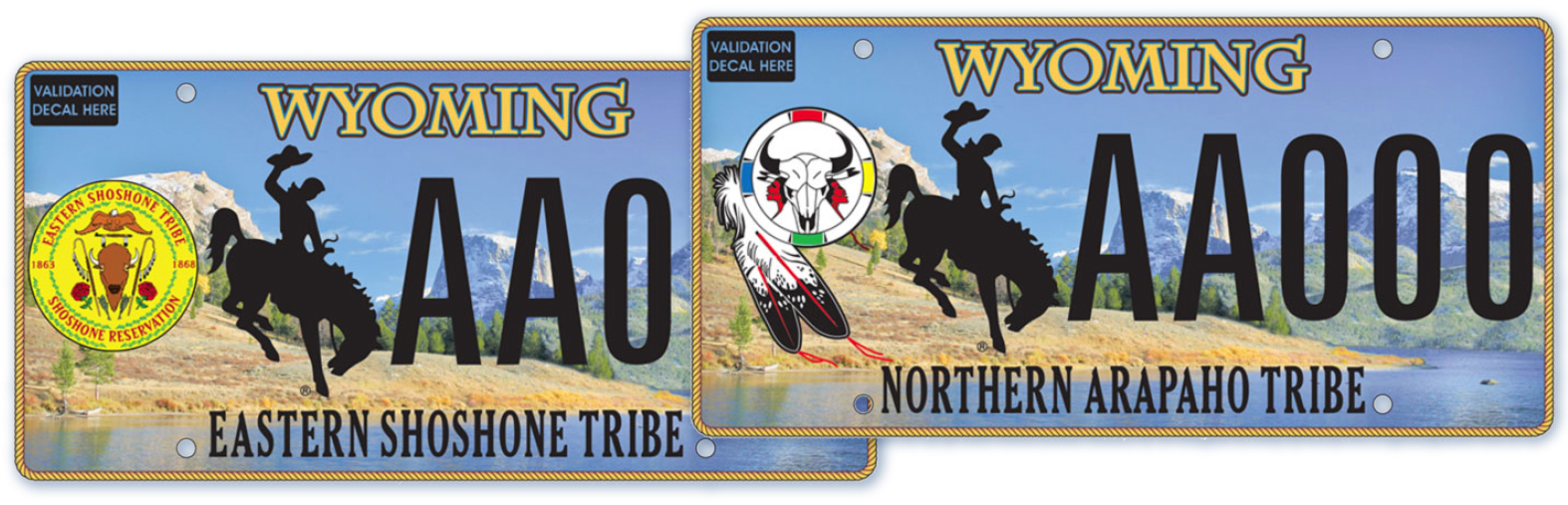
Wyoming Tribal License Plates

These are neat:

UW ALUMNI ASSOCIATION

UW LICENSE PLATES

Tribal License Plates to Fund Native American Student Scholarships at UW

But a question, and I ask it seriously.

Would putting these on a vehicle, assuming that you are not enrolled in either Tribe, be regarded as cultural appropriation?


I think I saw one of these recently, and had simply assumed that the vehicle belonged to an enrolled tribal member, which is partially why I'm asking, the other part being that I think it would matter how this would be viewed by those who are enrolled in either tribe.

Friday, February 17, 2023

Buckle your seatbelts Laramie, it's going to be a bumpy ride. The Coldest Case In Laramie.

Laramie, Spring 1986.

Kim Barker, a journalist who is best known for her book on Afghanistan, Whiskey Tango Foxtrot, is coming out with a podcast on a 1985 unsolved murder in Laramie.  Moreover, Barker was apparently a high school student at the time.

And she doesn't like the city of her alma mater at all.  Of it, in the promotions for this podcast, she's stated:

"I've always remembered it as a mean town. Uncommonly mean. A place of jagged edges and cold people. Where the wind blew so hard it actually whipped pebbles at you." 

Wow.

And there's more:

I don't like crime books, but oddly I do like some crime/mystery podcasts.  I'm not sure why the difference, and as I'm a Wyomingite and a former resident of Laramie, I'll listen to the podcast.

But frankly, I’m already jaded, and it's due to statements like this:

It was an emblem of her time in Laramie, a town that stood out as the meanest place she’d ever lived in. 

Really, you've been to Afghanistan, and Laramie is the meanest place you've lived in?

Hmmm. . . .  This is, shall we say, uncommonly crappy.  And frankly, this discredits this writer.

I've lived in Laramie twice.

All together, I guess, I've lived in Casper, Laramie, and Lawton (Ft. Sill) Oklahoma.  I've been to nearly every town and city in Wyoming, and I've ranged as far as Port Arthur, Texas to Central Alaska, Seoul, South Korea to Montreal.

The author may recall it that way, but if she does, it says more about her life at the time than Laramie.

And indeed, I suspect that's it.

If you listen to the trailer, you hear a string. . . dare I say it, of teenage girl complaints, preserved for decades, probably because she exited the state soon after high school, like so many Wyomingites do.  I can't verify that, as her biography is hard to find.  Her biography on her website starts with her being a reporter, as if she was born into the South East Asian news bureau she first worked for.  A little digging brings up a source from Central Asia, which her reporting is associated with, and it notes that its very difficult to find information on her.  It does say, however, that she grew up in Billings, Montana and grew up with her father.  Nothing seems to be known about her mother.  She's a graduate of Norwestern University, which supports that she probably graduated from high school in Laramie and then took off, never to look back.  How long did she live there is an open question, and what brought her father there is another.  Having said all of that, teenage girls being relocated isn't something they're generally keen on, and Billings is a bigger city than Laramie.  I have yet to meet anyone who didn't like Billings.

Now, I didn't go to high school in Laramie, but I was in Laramie at the time that Barker was, and these events occurred.  1985 is apparently the critical date, and I was at UW at the time.  I very vaguely recall this event occurring, and didn't at first.  I vaguely recall one of the things about Laramie that Barker mentions in her introduction, which was the male athlete branding.  What I recall is that there was a local scandal regarding that, and it certainly wasn't approved by anyone.

A lot of her miscellaneous complaints, however, are really petty and any high school anywhere in the United States, save perhaps for private ones, might be able to have similar stories said about it.  Boys being sent out to fight if they engaged in fighting within the school wasn't that uncommon in the 80s.  I don't recall it happening at my high school, outside of the C Club Fights, but I do recall it from junior high, in the 1970s, and experienced it myself.  I don't regard it as an act of barbarism, although I woudln't approve of it.  As noted, I recall this branding story, which was a scandal and not approved of, but today an equally appalling thing goes on all over the United States with the tattooing of children for various reasons, including minors, in spite of its illegality.  Certainly college sports teams feature this frequently, and I'd wager many high school athletes experience a similar example of tribalism.

What's really upsetting, however, is the assertion that Laramie was, and is, "mean".

When I went to Laramie in 1983 for the first time, I didn't look forward to it.  I found the town alien at first and strange.  I probably would have found any place I went to under those circumstances to be like that.  I was from Central Wyoming and had lived there my entire life, save for a short stint at Ft. Sill, Oklahoma.  But by the time I graduated in 1986, I had acclimated to it and there were parts of living in Albany County I really liked.  I was back down there a year later, this time not dreading it, and as a graduate student I was pretty comfortable in the town.

I also wasn't a teenager being dislocated from the place I grew up in.

In my last couple of years of undergraduate studies, and in all of my graduate years, I was pretty comfortable with the city.  I knew the places and things there, and had friends there.  In the summers, and I spent a couple there, it was a really nice place in particular to live.

And let's be honest.  Just as the land of high school angst might seem awful, the land you are in when you are young usually isn't.

If I had any complaints, at that time, it was about housing and prices.  Housing was always a crisis for a student, and a lot of the places I lived were not very nice.  Some were pretty bad.  And prices locally were really high, it seemed to us.  Local merchants complained about students shopping in Ft. Collins, but we did that as it was cheaper than shopping in Laramie.

The weather in Laramie is another thing.  It's 7,000 feet high, in the Rockies, and therefore it can be cold and snowy. The highway closes a lot.  In the early 1980s, it was really cold and snowy, with temperatures down below 0 quite regular.  Interestingly, by the late 1980s this was less the case.  And it does have wind, but ten everyplace from El Paso to the Arctic Circle is pretty windy.  Wyoming weather can be a trial for some people, particularly those who are not from here.

Which gets, I guess, to this.  A Colorado colleague notes that you have to be tougher just to live in the state.  You do.  Being from here makes you that way.  As the line in the film Wind River puts it, in an exchange between the characters:

Jane Banner: Shouldn't we wait for back up?

Ben: This isn't the land of waiting for back up. This is the land of you're on your own.

And that can be true.  If you aren't at least somewhat self-reliant, this may not be the place for you.

The further you get away from Laramie, the more this can be true.  Laramie is the most "liberal" city in regular Wyoming, surpassed in that regard only by Jackson.  Albany County nearly always sends at least one Democrat to the legislature.  If there's left wing social legislation pending, there's a good chance it comes out of Albany County.  Albany County is the only county in the state, outside of Teton, where all the things that drive the social right nuts are openly exhibited, due to the University of Wyoming.  In real terms, about 1/3d of the city's population are students at any one time, and a lot of those who are not students are employed by the University of Wyoming.

When I graduated from law school, I noted that a lot of students who passed through the College of Law stayed there if they could.  That says something about the town. Several good friends of mine over the years who are lawyers stayed there, including ones that had come there from other Wyoming locations.  Even a few of my non law school friends worked and lived there for a time, although none of them do any longer.

And in the years since I lived there the influence of Ft. Collins has come in, with downtown establishments mimicking those that are fifty miles to the south.  I've known people who retired and left the town, but I also have known people who retired to it.

It's not mean.

But the whole world is mean to some teenagers, with their limited experience and exaggerated sensibilities.  Some people keep that perception for the rest of their lives.

Wednesday, February 1, 2023

Today In Wyoming's History: 2023 Wyoming Legislature. Anti Historical Site Bill.

This bill:
Today In Wyoming's History: 2023 Wyoming Legislature. Anti Historical Site Bill.:  

2023 Wyoming Legislature. Anti Historical Site Bill.

 A bill to make it more difficult to designate historical sites has been introduced in the legislature.

HOUSE BILL NO. HB0281

Local government approval for historic site designations.

Sponsored by: Representative(s) Storer

A BILL

for

AN ACT relating to state historic sites; requiring the board of land commissioners to provide notice and to obtain consent from counties, cities or towns before making a historic site designation as specified; providing requirements; and providing for an effective date.

Be It Enacted by the Legislature of the State of Wyoming:

Section 1.  W.S. 36‑8‑108 is created to read:

36‑8‑108.  Designation of state historic sites; requirements.

After designation by the legislature but before any official designation is made for a state historical site when the property to be designated belongs to a county, city or town, the board of land commissioners shall obtain consent from the board of county commissioners or the local governing body of the city or town where the proposed state historical site is located. The board of county commissioners or the local governing body of a city or town shall be given not less than thirty (30) days written notice before the site is designated as a state historic site.  After notice is given and the notice period has passed, if no objection is made, consent to the designation of the historic site shall be presumed. 

Section 2.  This act is effective immediately upon completion of all acts necessary for a bill to become law as provided by Article 4, Section 8 of the Wyoming Constitution.

As this has a single sponsor, it likely will go nowhere, but its purpose is hard to understand.  Something being designated a historical site, contrary to widespread popular belief, doesn't commit private parties to anything.


Failed to make committee consideration, and therefore is dead for the session.

Friday, January 27, 2023

2023 Wyoming Legislature. Anti Historical Site Bill.

 A bill to make it more difficult to designate historical sites has been introduced in the legislature.

HOUSE BILL NO. HB0281

Local government approval for historic site designations.

Sponsored by: Representative(s) Storer

A BILL

for

AN ACT relating to state historic sites; requiring the board of land commissioners to provide notice and to obtain consent from counties, cities or towns before making a historic site designation as specified; providing requirements; and providing for an effective date.

Be It Enacted by the Legislature of the State of Wyoming:

Section 1.  W.S. 36‑8‑108 is created to read:

36‑8‑108.  Designation of state historic sites; requirements.

After designation by the legislature but before any official designation is made for a state historical site when the property to be designated belongs to a county, city or town, the board of land commissioners shall obtain consent from the board of county commissioners or the local governing body of the city or town where the proposed state historical site is located. The board of county commissioners or the local governing body of a city or town shall be given not less than thirty (30) days written notice before the site is designated as a state historic site.  After notice is given and the notice period has passed, if no objection is made, consent to the designation of the historic site shall be presumed. 

Section 2.  This act is effective immediately upon completion of all acts necessary for a bill to become law as provided by Article 4, Section 8 of the Wyoming Constitution.

As this has a single sponsor, it likely will go nowhere, but its purpose is hard to understand.  Something being designated a historical site, contrary to widespread popular belief, doesn't commit private parties to anything.