How To Use This Site


How To Use This Site


This blog was updated on a daily basis for about two years, with those daily entries ceasing on December 31, 2013. The blog is still active, however, and we hope that people stopping in, who find something lacking, will add to the daily entries.

The blog still receives new posts as well, but now it receives them on items of Wyoming history. That has always been a feature of the blog, but Wyoming's history is rich and there are many items that are not fully covered here, if covered at all. Over time, we hope to remedy that.

You can obtain an entire month's listings by hitting on the appropriate month below, or an individual day by hitting on that calendar date.
Use 2013 for the search date, as that's the day regular dates were established and fixed.

Alternatively, the months are listed immediately below, with the individual days appearing backwards (oldest first).

We hope you enjoy this site.

Tuesday, November 5, 2013

November 5

1872  Ulysses S. Grant was re-elected President.

1879  U.S. Army establishes camp on the Snake River.

1889  Wyoming's Constitution approved by the electorate.

1912    Woodrow Wilson was elected President.


Wilson took 36% of the Wyoming vote that year, with Republican Taft taking 34%.  Progressive Bull Moose Candidate Theodore Roosevelt, backed by Governor Carey who had left the GOP with Roosevelt, took 22%.  Socialists Eugene Debs took 6.5%.  Wilson probably only took Wyoming's electoral votes due tot he split in the Republican Party that year.  It's interesting to note that the popular Roosevelt came behind Taft.  It's also interesting to note that the platforms of Wilson, Roosevelt and Debs were all reform platforms.

1935    Parker Brothers began marketing the board game "Monopoly."

1940  President Franklin Roosevelt wins a third term in office.  Wyoming's electoral votes went to the incumbent President.

1943  A United States Army Air Corps bomber crashed near Evanston.  Attribution:  Wyoming State Historical Society.

1961  The Upper Green River Rendezvous Site designated a National Historic Landmark.

1968  Richard M. Nixon elected President of the United States.


Wyoming voted for Nixon, as it has for every Republican Presidential candidate after Lyndon Johnson.

1968  Republican John Wold elected as Congressman from Wyoming.  The Casper based oilman served one term as he gave up this seat to run unsuccessfully against incumbent Senator Gale McGee.

1994    George Foreman became boxing's oldest heavyweight champion at age 45 by knocking out Michael Moorer in the 10th round of their WBA fight in Las Vegas.

1996    President Bill Clinton won a second term.


50% of the Wyoming vote went to Republican challenger Bob Dole, with 12% going to 3d party candidate Ross Perot.

1996  Mike Enzi elected Senator from Wyoming.


The popular Enzi remains in Congress and was a central figure in recent efforts to effect a longterm solution to the ongoing American government's fiscal difficulties.  He faces a challenge this year from Liz Cheney, the daughter of former Vice President Dick Cheney.

2014:   After one of the most unusual election seasons in recent Wyoming history, the voters returned results that were actually fairly typical for Wyoming, going back over the last couple of decades.

Republican Governor Matt Mead easily defeated all of his opponents, including Democratic, Libertarian and independent challengers.  A late Tea Party effort revived for Dr. Taylor Haynes fell flat.
The Secretary of State's office went to Cheyenne businessman Ed Murray who likewise easily defeated all of his challengers, which did not include a Democratic challenger.  The inability of the Democrats to field a challenger to the office is perhaps emblematic of their basic collapse, as the office was occupied by a Democrat not all that many years ago.
The Secretary of Education slot went to Jillian Balow in a race that turned out to be surprisingly lopsided, as her Democratic challenger Ceballos was widely regarded as the best Democratic candidate for any office this year and he seemed to have a good deal of support.  Still, he also managed to run a serious campaign and secure over 60,000 votes in a year when the Democrats failed to field candidates for State Auditor, State Treasurer and Secretary of State.
Senator Enzi and Congresswoman Lumis easily defeated their opponents.
In what was perhaps the most surprising news, voters overwhelmingly rejected a proposed amendment to the State constitution which sought to allow for two trustees for the University of Wyoming to be picked from out of state residents.
In Casper, voters approved both the lodging tax and the renewal of the option 1 Cent sales tax.
Overall, this year would seem to take the recent trend of the complete collapse of the Democratic Party in the state out even further than prior election cycles.  The Democrats were able to field only a single candidate for office who was regarded as being a serious contender, and in the end he did not do as well as anticipated.  They didn't field candidates at all for three of the significant state offices, and none of the candidates for Congress were serious contenders. If the history of prior years hold, the Democrats will continue to fail to pick up the signals from the results, which clearly show that in the last 20 years the state's voters no longer trust the Democratic Party and the majority of active Wyoming Democrats of former years have grown inactive or quit the party entirely, leaving it in the hands of those who seemingly can't read the signs.  To some extent, libertarian third parties did better in performance this year than the Democrats did.
On the other hand, an election cycle that started off with a Tea Party insurgency inside of the GOP saw the voters completely reject that element twice.  Tea Party candidates within the GOP were defeated in the Primary, and Tea Party type elements outside of the GOP did badly in the general election.  Tea Party platforms locally, which seemed to have perhaps defeated the NSCD No. 1 bond earlier in the year, failed to make an impact on the optional 1 Cent tax and the Lodging Tax.  A Constitution Party candidate on the ballot for the Natrona County Commissioners received the least votes of any of the candidates, even when a long term County Commissioner (a Democrat) failed to receive enough votes for reelection.

2016:   Lex Anteinternet: Rally for Public Lands, Casper Wyoming, November 5, 2016
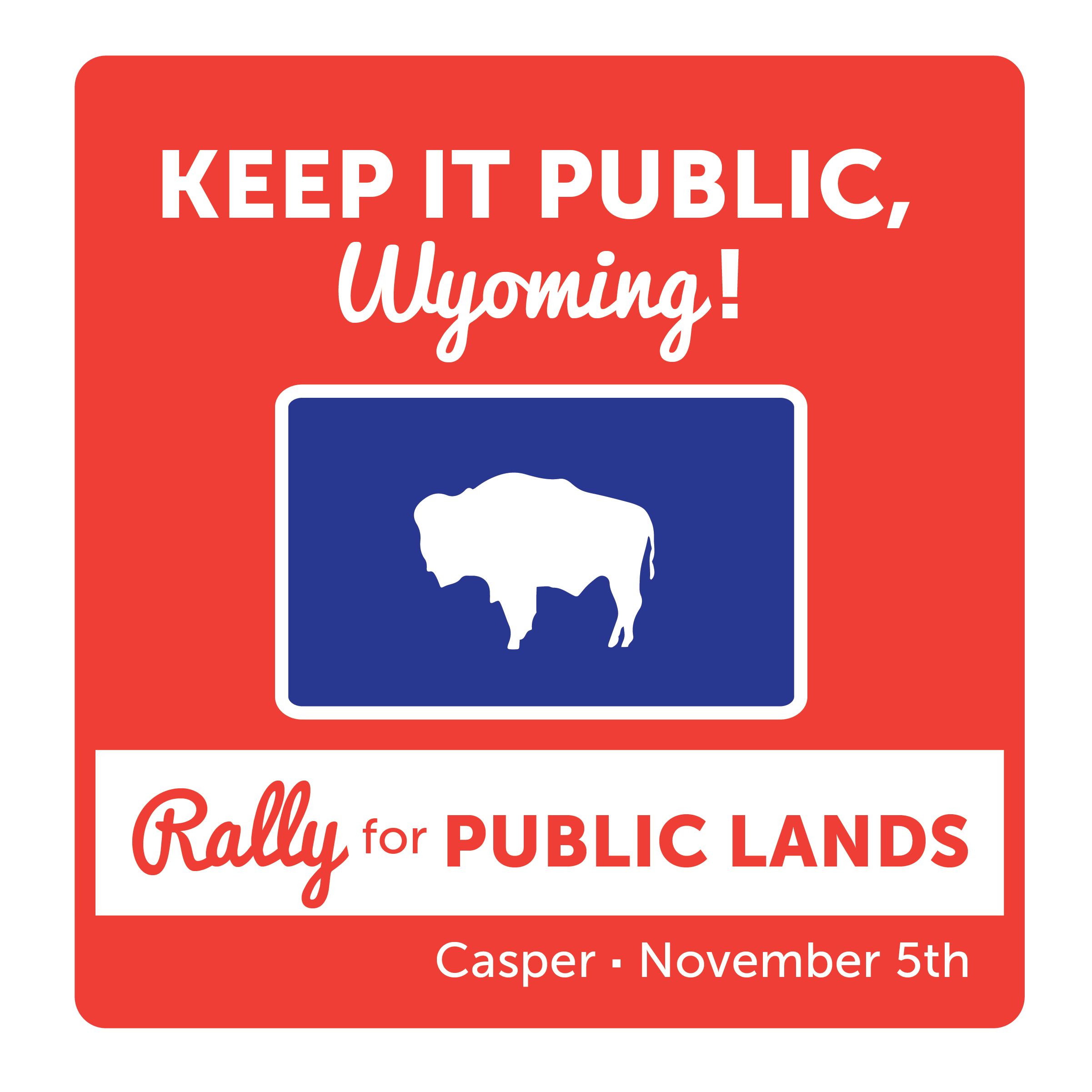
keep-it-public-files_main-graphic


Monday, November 4, 2013

November 4

1804  Lewis and Clark record in their journal that Sacagawea was the wife of Toussaint Charbonneau.  In fact, she was one of two wives that Charbonneau had married either at the same time or close in time, with both of them being in their mid teens at the time.  He'd marry three more times during his life, with his last marriage coming at age 70. All of his wives were Native Americans and none of them were older than sixteen years old at the time of the marriage.

1835  Texas forces defeat Mexican forces at the Battle of Lipantitlán in San Patricio County.  Attribution:  On This Day.

1856  The Mormon Martin's Handcart Company, attempting a late crossing of the Oregon Trail, and having run into trouble with the weather, seeks shelter in the Martin's Cove area near Independence Rock, along with a rescue party having sent to find them.  They had not embarked on their efforts until August 27, making an attempt to cross extraordinary late in the year.

1856  James Buchanan was elected US president.


1868  Red Cloud arrived at Ft. Laramie to execute a treaty that gave him victory in Red Cloud's War.  The treaty had been negotiated that prior April.

Proclamation of Thanksgiving.

BY J. A. CAMPBELL GOVERNOR OF THE TERRITORY OF WYOMING.

THE PRESIDENT OF THE UNITED STATES HAVING DESIGNATED

Thursday, the 27th day of November, 1873,

As a day of Thanksgiving and Praise, I recommend the faithful observance of the day by all the people of Wyoming, in accordance with the usual and time-honored custom.

"GIVE THANKS UNTO THE LORD, FOR HE IS GOOD, FOR HIS MERCY ENDURETH FOREVER."

IN TESTIMONY WHEREOF, I have hereunto set my hand, and caused the Great Seal of the Territory to be affixed. Done at Cheyenne, this, Fourth day of November, in the year of our Lord one thousand eight hundred and seventy-three.

J. A. CAMPBELL.

[seal] * GREAT SEAL * TERRITORY OF WYOMING [/seal]

By the Governor:

JASON B. BROWN,
Secretary of Territory.


Territorial Governor Campbell was of course a Republican, but not of the type that Republicans would now recognize.  He was a political liberal and a backer of women's suffrage.  He's served in the Union Army as a general during the Civil War and died in 1880 at the mere age of 44. 

After leaving his post as the Territorial Governor, he served in various capacities in the Federal government for the remainder of his short life.  Campbell County Wyoming is probably named after him, although there's some dispute on that.

Last edition:

Wednesday, November 3, 1875. A fateful day.


1879. Will Rogers was born in Oologah, Okla.  Sometimes forgotten, Rogers' career as a humorist and political commentator commenced when he started doing a monologue while doing rope tricks.  He was, at first, a cowboy and trick roper.


1884 Grover Cleveland elected President.


1889  A meeting regarding the ratification of Wyoming's Constitution was held in Rawlins.

1924 Nellie Tayloe Ross of Wyoming was elected the nation's first woman governor, when she was elected in a special election to fill the term of her late husband, who had been governor. She would serve until 1927, when she would leave office after having narrowly lost the 1926 election. She refused to campaign in either election, but remained popular nonetheless. Her 1926 loss is likely attributable to her refusal to campaign, which her opponent did do, and her strong support for Prohibition. She would later serve in Franklin Roosevelt's administration and Truman administration as the head of the United States Mint.
1924  Calvin Coolidge elected President.


Coolidge took 52% of the Wyoming vote, but showing a strong remaining progressive/populist streak, Robert LaFollette of the Progressive Party took second place with 32%.  The Democratic candidate, the forgotten John Davis, took the balance.

1930  The USS Wyoming became the flagship of Rear Admiral Harley H. Christy, Commander Training Squadron, Scouting Fleet.  Attribution:  On This Day.

1952     Republican Dwight D. Eisenhower elected president.


The popular Eisenhower took 63% of the Wyoming vote.

1952  Frank A. Barrett, Republican from Lusk, was elected to the Senate.


The Republican Barrett concluded a term of Governor upon his election and he had been a Congressman from Wyoming previously.

1980  Ronald Reagan elected President.


Reagan took 63% of the Wyoming vote.  Third party candidate Anderson took 7% and the balance went to the unpopular incumbent Jimmy Carter.

2008  Barack Obama elected President.


John McCain took 65% of the Wyoming vote.

2008  Cynthia Lummis elected to Congress from Wyoming.


Sunday, November 3, 2013

November 3

St. Hubert's Day.

Today is St. Hubert's Day.  That is, the day on the Catholic calendar honoring this Saint.


St. Hubert is the patron Saint of Hunters and is still celebrated in Northern Europe, where he is the patron of hunting associations.  In Germany, hunters celebrated this day as Hubertustag, pausing in the hunting season to honor St. Hubert.

As we had just referenced him in the post noted above, and we're further noting this day ourselves.

Seems like an appropriate thing to note in Wyoming.

1762         Spain acquired Louisiana from France.  So, as of this date, a small part of Wyoming that was previously French Louisiana, was Spanish Louisiana.  But not for long.

1812  The Robert Stuart party build a cabin in the Narrows, Bessemer Bend, region of what is now Natrona County. This primitive structure is generally regarded as the first European American cabin in Wyoming.  A monument to the cabin was until very recently located along the highway in the appropriate spot, but it was recently removed for road construction.  A later wooden sign, common for historical markers in Wyoming, once existed but was removed many years ago. That marker noted the cabin as the "first white man's cabin" and I've sometimes wondered if the verbiage was regarded as politically incorrect in later years.

The Stuart party did not occupy the cabin long as they found themselves on the boundary of a dispute between Indian tribes and the location was dangerous. They there decamped and relocated over 100 miles distant.

Attribution:  Wyoming State Historical Society and Some Gave All.

1868 Ulysses S. Grant won the presidential election over Horatio Seymour.


1875   Wednesday, November 3, 1875. A fateful day.
President Ulysses S. Grant held a secret meeting with his cabinet and top military officials to decide on a strategy to force Native American tribes to move onto reservations in the West.  For the most part, they already had, but leaving the reservations seasonally was common.  With an increased agricultural and industrial population in the West, including forces which wished to exploit mining opportunities, real or imagined, this was an increasing problem for Washington.

This was a major step toward launching the final series of Indian Wars in the Rocky Mountain West.  While various struggles would continue into the 1890s, 1876, the following year, would be the deciding one.

By odd coincidence, November is Native American Heritage Month.

Last edition:


1890  The U.S. District  Court for the District of Wyoming went into session for the first time.

1890  Clarence Don Clark elected as Wyoming's first Congressman.


The nearly forgotten Clark was a New York born lawyer who had relocated to Wyoming in 1881.  The Republican from Evanston served two terms as Congresman and later served in the Senate.

1892  Henry Coffeen, Democrat from Sheridan, elected to Congress.  He would serve one term.

1896 William McKinley defeated William Jennings Bryan for the presidency.

President McKinley.

This was the second Presidential election in which Wyoming's voters had a part.  Consistent with their populist swing in the prior 1892 election, Wyomingites gave the majority of their votes to the Democratic populist, William Jennings Bryan, who took 51% of the vote.  The Prohibition Party candidate that year only took .75% of the vote, with McKinley taking the rest.  Like the prior election of 1892, this Presidential election was showing the influence of major swings and upset within both parties.

 Willam Jennings Bryan.  

Bryan didn't ever succeed in being elected President, but he did become the Secretary of State under Woodrow Wilson and was briefly a Congressman from Nebraska.

1896  Democratic Governor John E. Osborne elected to Congress from Wyoming.  He would serve a single term.

1908 William Howard Taft defeated William Jennings Bryan, handing Bryan another defeat.

By 1908 Williams Jennings Bryan was not only a fading star nationally, but also in Wyoming.  Taft had been the Vice President of Theodore Roosevelt, a wildly popular figure in Wyoming, and he took 55% of the vote.  Eugene Debs, the Socialist party candidate took 4.5% of the vote, with Bryan taking the balance.

1911  Chevrolet enters the automobile market.

1933 John B. Kendrick, U.S. Senator from Wyoming, and sponsor of the Kendrick Irrigation Project in Natrona County, died.  Prior to being elected Senator, he had served as Governor.


1936 Franklin D. Roosevelt re-elected in a landslide over Alfred M. ''Alf'' Landon.


Franklin Roosevelt took 60% of the Wyoming vote in 1936, up from 56% in 1932.

1936  Henry H. Schwartz, Democrat from Casper, elected to the U.S. Senate.  Schwartz served one term and was defeated in his reelection bid.  The Ohio born lawyer practiced law in Casper.

Henry H. Schwartz

1942.  Lester Hunt, DDS, the sitting Wyoming Secretary of State and a Democrat narrowly defeated Governor Nels H. Smith.

Lester C. Hunt.

Hunt would serve as Governor for two terms before going on to becoming Wyoming's Senator.  He killed himself in 1954 after Washington D. C. policy picked up his son in 1953 for soliciting a male prostitute.  The scandal was kept quiet for awhile, but political opponents threatened to use it against him as a threat to keep him from engaging in a 1954 bid for office.

In the Senate Hunt had been an opponent of Joe McCarthy.

In the same year that Wyoming went from Republican to Democrat for the Governor's mansion, the state went in the opposite direction for the Senate.  Edward V. Robinson defeated incumbant Harry Schwartz.

Robinson.

Robinson's election was part of a nationwide treand that year that saw a Republican increase.  He's serve only one term and lose a bid for reelection.  He was Welsh and had served in the British Army in the Boer War and is little remembered as a Wyoming politician.

China's civil war was acknowledged now to be a major conflict and two Game Wardens were found dead near Rawlins.


The Chinese Civil War was the topic of a political cartoon as well.

The murdered Game Wardens were Bill Lakanen and Don Simpson who were killed by ardent Nazi sympathizer and German immigrant Johann Malten.   The same Game Wardens had arrested Malten for game violations when investigating, interestingly enough, claims that Malten had been involved in espionage and was relaying weather reports on shortwave, something that was illegal during the war when there was a blackout on weather reporting as the information was useful to submarines.  Upon visiting Malten's cabin in the Sierra Madres they found he had committed numerous game violations.

On this occasion they were stopping by to see if Malten had continued to ignore the law.  They were shot down out of hand when they arrived.

Malten burned his cabin down and it was officially reported that he'd died within it, although the evidence of that is very poor.  There were reported sightings of him for years thereafter.

And a selection of 1945 cartoons.


The 3 November 1945 declaration was made in Indonesia, encouraging the formation of political parties as part of an anticipated Indonesian democracy.

Irvin Charles Mollison was sworn in as a U.S. Customs Court judge in New York City.  He the first African-American to serve on the federal bench within the continental United States.

Last edition:

Thursday, November 1, 1945. The sabotage of railways in Mandatory Palestine.


1958  Gale McGee was elected to the U.S. Senate.  He was the first, and so far the only, University of Wyoming instructor to be elected to the U.S. Senate.   He was a Democrat.

McGee fit into another era in Wyoming's politics in that he was able to be elected as a Democrat and, perhaps even more surprisingly, the Class 2 Senator position was occupied by a Democrat at the time that McGee was elected, making both of Wyoming's Senators Democrats.  He served from 1959 until 1977.  That he was elected in the late 1950s is surprising to recall, because his somewhat flashy sartorial style really fit in with the early 1970s.  Nonetheless his service stretched all the way back to 1959 and he was sworn in as  Senator by Vice President Richard Nixon.  After being defeated for a reelection bid in 1976, a campaign which he was largely absent in, he was appointed by President Carter as the Ambassador to the Organization of American States.

Politically McGee was slightly liberal, but remained a popular Wyoming politician.  His defeat in 1976 was attributed by the national media to his opposition to the Vietnam War which was almost certainly incorrect.  McGee did oppose the war, but his seat remained safe throughout it.  There has been some speculation that by 1976 he no longer wanted to remain in the Senate but for one reason or another ran anyhow.  That would be more consistent with his campaign that year against Malcolm Wallop in which Wallop was allowed to run a nearly unopposed campaign.  McGee was the last Senator from Wyoming to be a member of the Democratic Party.

The Post Office in Laramie is named after Senator McGee.

1964  Lydon Johnson elected President.


 Johnson was the last Democratic Presidential candidate to receive the majority vote in Wyoming, receiving 56% of Wyoming's vote that year.

1964  Teno Roncolio, a Democratic lawyer originally from Rock Springs, but living in Cheyenne at the time, elected to Congress.


Roncolio would only serve one term from his 1964 election, and then attempt a run for the Senate.  His Senatorial run was unsuccessful and he would regain his position in the House in 1970.

Roncolio's 1964 election meant that two out of the three members of Congress (House and Senate) from Wyoming were Democrats, an event which would be almost inconceivable today.

Roncolio received the Silver Star while serving in the U.S. Army during World War Two for heroism in the invasion of Normandy, and he was one of the sources interviewed by Cornelius Ryan for his Book "The Longest Day."  Roncolio was the last member of the Democratic Party to be elected to Congress from Wyoming.

1999  Aaron McKinney convicted of the murder of Matthew Shepard the year prior.  Attribution:  On This Day.

2016  Buffalo (Bison) were returned to the Wind River Reservation by the Eastern Shoshone tribe. The introduced buffalo were ten in number.

2020  Joe Biden was elected President, defeating incumbent Donald Trump, although in a race that could not be officially called for days due to it being so close. The election also featured an enormous vote tally, exceeding any prior election.  Kamala Harris was elected Vice President, becoming the first female Vice President in U.S. history.

Joe Biden as Vice President.

In Wyoming, Cynthia Lummis was elected to the office of Senator, becoming the first female Wyoming Senator.  Liz Cheney was reelected to Congress.  The race was remarkable in that all the major candidates for Congress were women for the first time in the state's history, with Cheney facing female challenger and Native American Lynette Grey Bull and Lummis facing University of Wyoming professor Marev Ben David.

Cynthia Lummis.

The race also saw a Libertarian elected to the state's legislature, the first time a member of a third party has been elected to a Wyoming state office for a century.

Saturday, November 2, 2013

November 2

Today is All Souls Day.

Today is Statehood Day in North Dakota.

Today is Statehood Day in South Dakota.

1812   Robert Stuart and five others began construction of a cabin at the mouth of the Poison Spider Creek in Natrona County..  The cabin was the first cabin known to be built by European Americans in Wyoming, although this does not discount the possibility that French Canadian trappers may have built structures earlier.

The temporary cabin proved to be very temporary, as it happened to be built in area of inter Tribal Indian strife and, therefore, was a dangerous location. Smith and company soon pulled up stakes and relocated for the winter in the location of the current Scotsbluff Nebraska.

For many years, this cabin was marked by a Wyoming Historical Marker sign noting it as the "First White Man's Cabin in Wyoming", but the sign came down some 20 years ago and was never put back up.

1824 In the popular vote Gen. Jackson beat John Quincy Adams in the race for the Presidency, but subsequent actions in Congress would see the House elevate Adams, and not Jackson, to the office.  This, of course, is not specifically Wyoming history, but the geography of what would become Wyoming was already mostly owned by the United States (with some still belonging to Mexico).

1875  The fourth session of the Territorial Legislative Assembly convened in Cheyenne.  Attribution:  On This Day.

1876  Future author  Charles King, 1st Lieutenant 5th Cavalry, serving in the U.S. Army, was detailed to engage in scouting in Wyoming and assigned to Ft. D. A. Russell where he would stay until July, 1877.


King would have an interrupted military career, serving as  late as the 1890s in the Philippines after having had a career in the Frontier Army.  While not well remembered in general for his literary works today, his books on the Frontier are still fondly recalled by those who study and have a fondness for the Frontier Army.

1880 James A. Garfield elected President.


Garfield was honored in at least Casper Wyoming, many years after his death, through the naming of a public school in his honor (which I attended eons ago).  Garfield Elementary School was school constructued in the 20s or 30s, and added on to during the 1950s or 1960s, and renamed to that name in the process.  During the reorganization of the Natrona County School District's schools in recent years, that school was closed and sold, but the name retained and applied to the existing Willard Elementary School, whose name was also retained placing two names on a single school.

1889 Wyoming's neighbors North Dakota and South Dakota became the 39th and 40th states.

1907  Former Governor John E. Osborne married  Selina Smith of Princeton Kentucky.

1908  A music school opens in Sheridan Wyoming.  Attribution:  Wyoming State Historical Society Calendar.

1916   The Wyoming Tribune for November 2, 1916: Attacks on Kendrick, Mexican rebel outrages, and other news
 

Presumably unaware that it was being attacked by The Cheyenne Leader on the same day, for its Kendrick articles, the Tribune kept up the drum beat. . . along with other shocking news.
The Cheyenne Leader for November 2, 1916: The Wyoming Tribune's attacks on Kendrick sponsored by Wall Street figure?


The Tribune had been (and will continue to) attacking John B. Kendrick daily on a matter of a state land purchase.  The Leader, in today's issue, claimed that the attacks were sponsored by an out of state opponent.

Even if they were, of course, the Tribune was staunchly Republican and backing all the GOP candidates that year. And it was sensationalist at the time as well.

1917   Freshman Caps? The Wyoming Student, November 2, 1917.
 

Freshman caps?

I'd  never heard of such a tradition, and it certainly didn't exist while I was at UW, that's for sure.
It seems they were passed out around Halloween and you were compelled to wear them, if you were a UW freshman, until the Thanksgiving break.

Based on the description, I guessed they were beanies.  And in looking up the term, I found that, yes, in fact, they were. Apparently this was a widespread college tradition at the time.  For example, the college paper for Ohio State reported in a 2014 article:
Freshmen Buckeyes were required to put on another hat besides their thinking cap back in the day
Just over 100 years ago, the tradition of the class cap was born, and all freshmen men were required to wear a class cap  or beanie as initiation into the university.
According to OSU archives, the cap tradition began in 1912 and its look changed throughout its lifetime at OSU, including styles such as “jockey-style,” the “knitted toboggan” and the “peanut-shaped skull cap.”
And Penn State's college paper recalled the tradition in a 2015 article:
UNIVERSITY PARK, Pa. — In 1906, upperclassmen at the then-Pennsylvania State College voted to have freshmen wear something to distinguish them from the rest of the students — thus the tradition of the "dink" was born.
Easily identified by the small beanie caps, freshmen were expected to know Penn State trivia and history and were often randomly called upon by upperclassmen to prove they were knowledgeable about their new school.
At least some schools preserve the tradition slightly:
RAT caps were first found on Georgia Tech’s campus in 1915. They were originally called “freshmen caps” because of the white F on the front of the cap standing for “Freshmen” rather than the traditional “T” we see today. All freshmen were required to wear the caps every day until the end of spring quarter unless Tech beat UGA in the fall quarter’s freshman football game. Freshmen caught without their RAT cap were subjected to punishment including what is known as the “T-cut”, which entailed a student’s hair being shaved into the shape of a “T”. RAT rules were enforced by Ramblin’ Reck Club and other upperclassmen. Anti-hazing policies led to the end of RAT rules. Today, out of respect for the tradition, freshmen receive a RAT cap at Convocation. Although it is now a voluntary tradition, students are encouraged to show their Tech spirit by wearing it to home football games. The marching band is a proud supporter of this wonderful Tech tradition.
A line in the last paragraph suggests something that probably is self evident.  No matter what the traditional was, it'd be difficult for this tradition to be carried on today.  Even though this tradition is long dead, some (student probably) commented on the Ohio State items thus:
This is flat out hazing. If we’re trying to remember this in a positive light, the entire university needs to reconsider how we look at student initiations.
Hmmmm. . . I'm certainly opposed to hazing, and I'm glad these weren't around when I was in university, but that seems a bit of an over reaction.  Apparently some other reader (student?) also thought so as well, starting off with  "(***), you are softer than baby thighs." and going on from there.

Well, a long gone hat related tradition.  I know of a few others, but this is one that I frankly was completely unaware of.
___________________________________________________________________________________
Related threads:
Caps, Hats, Fashion and Perceptions of Decency and being Dressed.

1919  E. G. (Gerry) Meyer, Professor Emeritus of Chemistry and former Dean of College of Arts and Sciences at the University of Wyoming was born in Albuquerque, New Mexico.  As of the date of this entry (2019) Professor Meyer was a alive and still occupying the noted position.
  
1948  Wyoming votes for incumbent Harry Truman in the 1948 Presidential election.  Truman receives 52,354 votes to Dewey's 47,947.


1976. James E. Carter elected President of the United States.


Carter can be regarded as fitting into the more recent era of  Wyoming's politics in which Democratic candidates have had a much more difficult time on a local and national level, in regards to Wyoming's elections.  Carter himself was elected in the wake of the Watergate Disaster and was not a popular candidate in Wyoming, where he did not receive the state's support.  No Democrat running for President has received any significant support in Wyoming since Lyndon Johnson.

1982  Governor Ed Herschler elected to an unprecedented third term.   Attribution:  Wyoming State Historical Society.

 
Gov. Herschler receving a Stetson from a ceremonial detail, dressed in the uniforms of the Frontier 5th Cavalry, U.S. Army, from F. E. Warren Air Force Base.

In contrast to Democratic candidates for Federal offices, Herschler is proof, along with later Governors Sullivan and Freudenthal, that the local Democratic party can still contend for the Governor's office, in spite of the decline in the Democratic Party's fortunes in Wyoming.  Herschler was a popular Governor, and had an interesting personal history, including serving as a Marine Corps raider during World War Two.

2004 President George W. Bush was elected to a second term.


2010  Matt Mead obtains the majority vote in the Wyoming Gubernatorial election.

2012  It is reported that half of Wyoming County, West Virginia, was without power due to Hurricane Sandy.

2015:  The City of Casper, in a special referendum, approved the reinstatement of a full ban on smoking in buildings open to the public.  The history of the topic had been particularly bitter and confused, with an ordinance having been passed, then amended to allow smoking in bars, which was struck down by the Wyoming Supreme Court.

Friday, November 1, 2013

November 1


1620 Mayflower Compact signed, albeit by a minority of those who traveled over.

1835 Texans begin siege of San Antonio.

1866  William J. Fetterman arrives at Ft. Phil Kearney.

1886  First snowfall of what would prove to be a disastrous winter. Attribution.  Wyoming State Archives.

1904     Army War College opens, with Capt. John J. Pershing in the first class.  Pershing's father in law was U.S. Sen. Francis E. Warren of Cheyenne.

1911  The Wyoming General Hospital opens in Casper, Wyoming.  The hospital remains open today, in different quarters, as the Wyoming Medical Center.

1916   The Laramie Republican for November 1, 1916: Villa again, and the Marina
 

Similar news to that of the Wyoming Tribune, but less dramatic.
The Wyoming Tribune for November 1, 1916. Villa resurgant, land sales questioned
 

By this date in 1916, it looked to be the case that Villa, who had been down and out just this past March, was resurgent.

And the sale of public land was being questioned.

And of course the drama and tragedy of World War One continued on.

1919  A contingent of the 15th Cavalry under the command of Major Warren Dean arrived at Ft. Mackenzie from Ft. D. A. Russell in order to deal with labor strife at Carneyville, near Sheridan.

Today In Wyoming's History: November 1, 1919: Labor Strike and Reaction visits Wyoming.

On this day in 1919.
Today In Wyoming's History: November 1
1919  A contingent of the 15th Cavalry under the command of Major Warren Dean arrived at Ft. Mackenzie from Ft. D. A. Russell in order to deal with labor strife at Carneyville, near Sheridan.
It was a year for labor strife, and that strife was looking like it was going to visit Wyoming.  The strike itself was a nationwide coal strike.

At the time, a coal strike threatened the entire nation's well being. Everything from industry to home heat depended on coal.  And coal was a significant industry in Wyoming then, as now.

That other significant industry in the state in 1919, agriculture, celebrated the outdoor life in its December 1919 issue.


What was being shown on the cover wasn't really a very good idea.

1940  The 115th Cavalry Regiment, Wyoming National Guard, re-designated the115th Cavalry Regiment (Horse Mechanized).  The change in designation came about as a reflection in a de facto change in the TOE of the unit, which was made into a new category in the Army.  Horse Mechanized was a late horse cavalry era effort to incorporate motorization within the horse mounted units. While no horse mechanized unit ever saw action in the U.S. Army during World War Two, the concept was not far from what was actually employed by the Soviet Union during the war.

The 115th Cavalry had a very good reputation early in its mobilization period, and was highly praised by Lucien Truscott, the World War Two general, in his book Twilight of the Cavalry.

1943  The War Housing Administration met with residents of Green  River about upcoming housing projects.  Attribution:  Wyoming State Historical Society.

1957  A blizzard featuring ice storms, a relatively rare event in Wyoming, commenced.

1995  A major winter storm closed highways.

2000 A blizzard in northeastern Wyoming brought down power lines in the area.